Quartz vs. Granite

Quartz vs. Granite

Which surface is the better fit for your kitchen, lifestyle, and design priorities?
Which surface is the better fit for your kitchen, lifestyle, and design priorities?
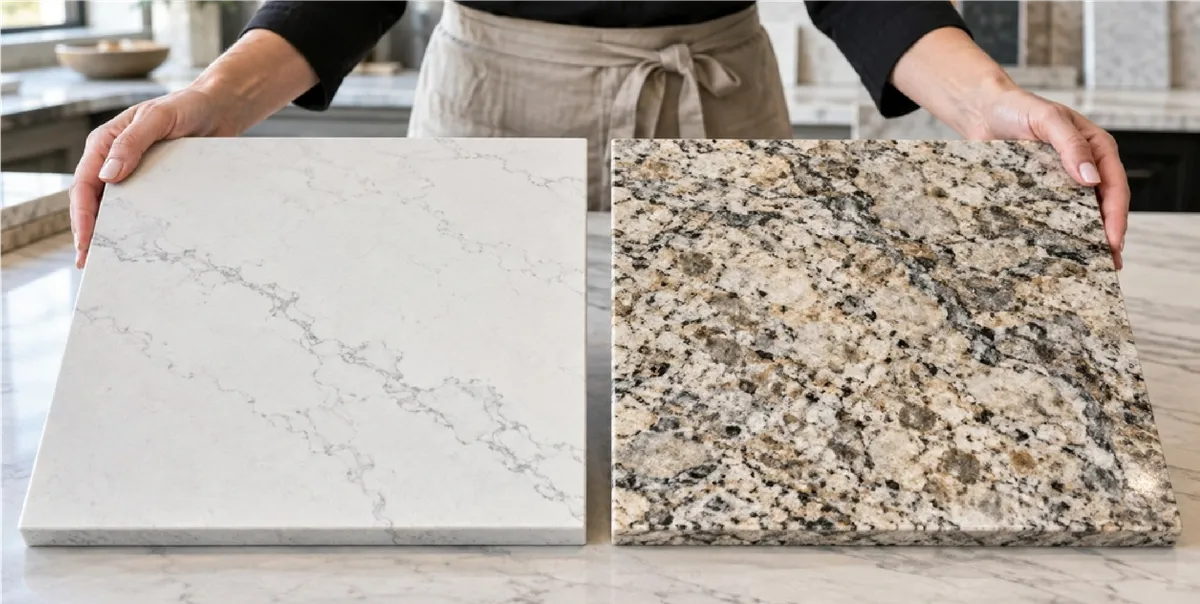
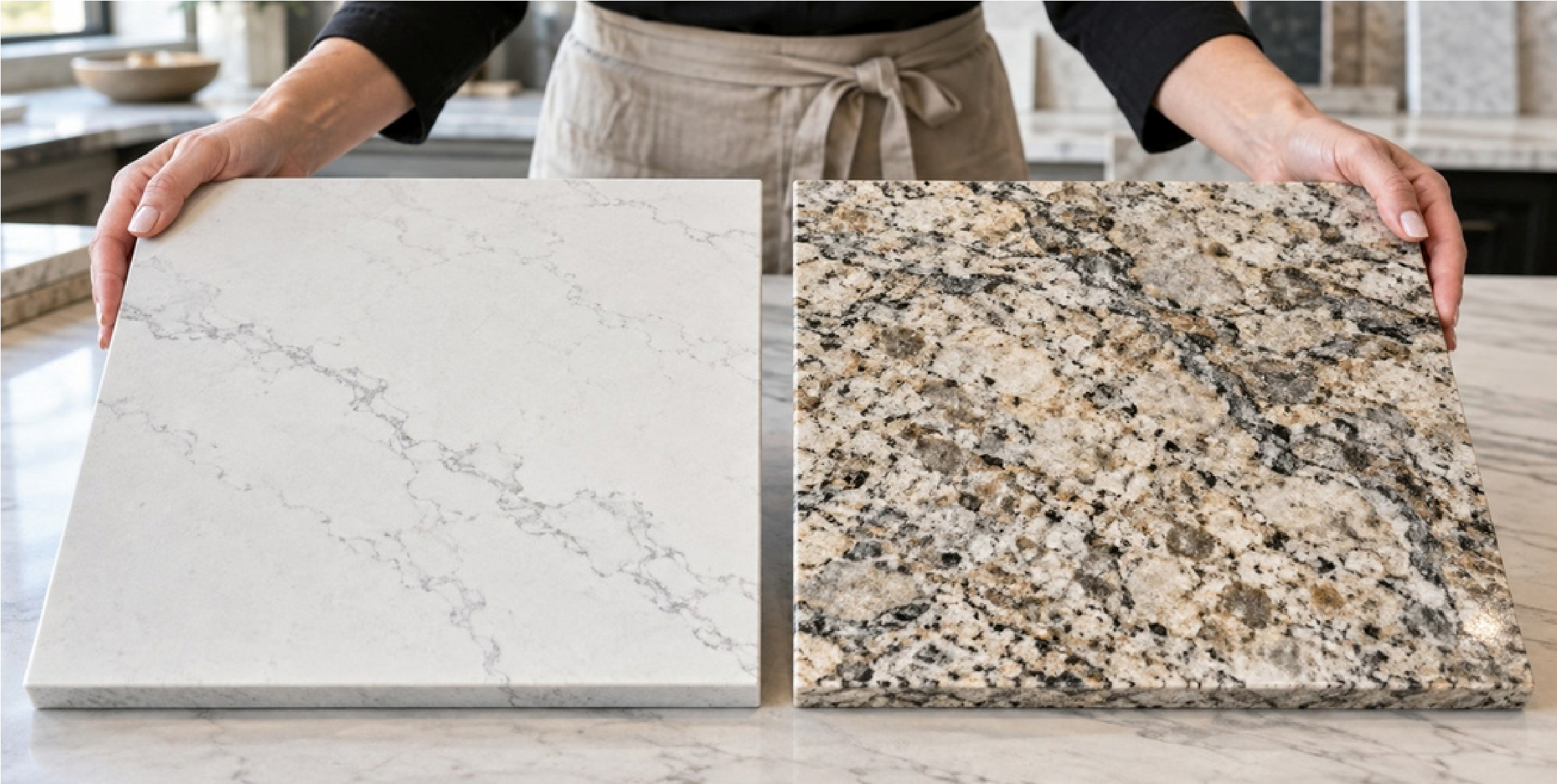
Quartz offers controlled color, consistent patterning, and low routine maintenance. Granite offers genuine natural-stone movement, a one-of-a-kind slab, and strong heat performance.
Quartz countertops are engineered from quartz minerals combined with resins, pigments, and other components. Manufacturing creates repeatable colors and patterns, although full slabs can still vary from small samples and pattern placement matters.
Granite is quarried natural stone. Mineral composition, movement, fissures, pits, and color vary from slab to slab, which is part of its appeal.
CHOOSING THE RIGHT OPTION
Appearance And Seams.
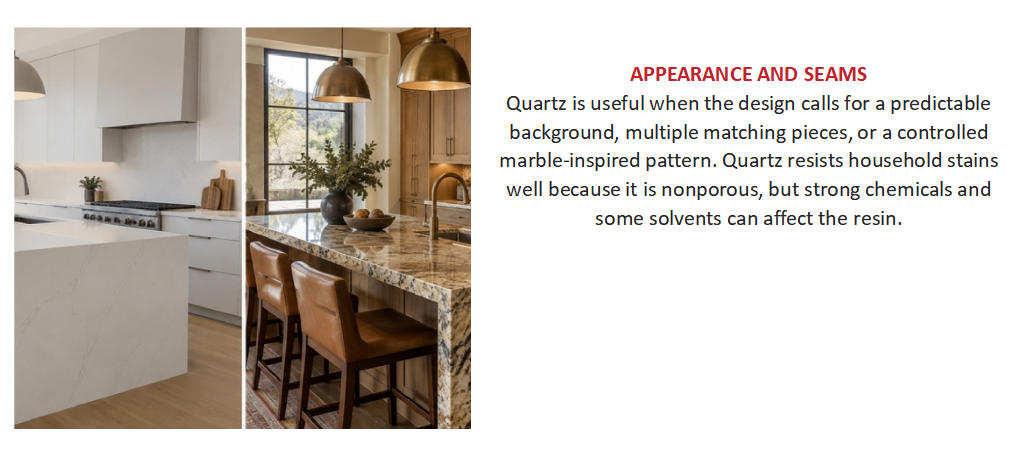
For quartz, use warm water, mild soap, soft cloth, or a manufacturer-approved cleaner. For granite, use a pH-neutral stone cleaner or mild soap and water, then maintain the sealer as recommended. Pricing overlaps. Entry-level and premium options exist in both categories, and the final cost depends on slab quantity, color, thickness, layout, seams, edges, cutouts, and installation conditions.
Choose quartz when easy routine care, consistent color, controlled pattern, and coordinated pieces are priorities. Choose granite when natural movement, unique mineral character, and selecting a one-of-a-kind slab matter most. Take large samples home when possible and view them beside cabinet doors, flooring, backsplash, and paint.
Think about where hot pans land, where oils and wine are used, how often children prepare food, and how quickly spills are normally cleaned. Material choice is only part of performance. Choose quartz when consistency, nonporous care, and a controlled design are the strongest priorities.
Ready to explore your countertop options?